The Human Skills Our Future Depends On
Learned deliberately. Lived across life.


Who We Are
We can engineer self-driving cars, yet struggle to navigate difficult conversations.
We can analyse complex data, yet freeze when decisions carry emotional weight.
We can predict human behaviour at scale, yet remain unskilled at regulating our own emotions.
This isn’t a failure of intelligence.
It’s a failure of what we choose to teach.
Technical capability has advanced faster than human capability, and too many of the skills required to live, work, and lead well have been left to chance.
Oka exists to change that.

what oka does
Oka is an organisation focused on rebuilding the human skills that shape life outcomes.
These skills are well established in psychology, neuroscience, education, and organisational research and consistently linked to:
resilience and stronger wellbeing
better analytical thinking and decision-making under pressure
healthier relationships, social functioning and social influence
psychological flexibility and sustained performance over time
greater sense of agency and improved leadership skills
higher life satisfaction and improved life outcomes
These are also the skills most vital in a future shaped by AI. They underpin judgment, collaboration, adaptability, creativity, and responsibility in ways technology can’t replicate. And they even enable AI to be used more productively and helpfully.
Oka’s work makes these skills explicit, learnable, and transferable, rather than assumed or inherited.
"Analytical thinking tops employer skill needs. Resilience, flexibility, leadership and social influence follow, with up to +22 percentage points jumps since 2023."
World Economic Forum, Future of Jobs Report 2025
Why this matters, especially now.
The skills Oka develops shape how people think, decide, connect, and lead drive health, resilience, and performance. This is increasingly important in a world where work is faster and AI carries more of the cognitive load.
Too often, these skills are learned by chance, compounding advantage and wasting potential. Oka sees that as a learning problem, with implications for every individual and society as a whole.
bottom up
Oka works with people to build the human skills that matter most: in those places where decisions are made, pressure is high, and potential unfolds.
We do this through:
Workshops and experiences for young adults, students and early‑career adults, through Discovering You.
Programmes embedded in universities, colleges and sport.
Applied learning that solves real problems while strengthening transferable skills for work and life.
Each programme is a two‑way learning process. Participants strengthen their skills, while Oka continually refines how those skills are developed.


discovering you!
What is Discovering You?
Discovering You is a psychologically grounded framework that helps people understand and map how they develop over time. How they make sense of experience, build confidence, form relationships, and take action in the world.
It has evolved from the work set out in the award winning book Defining You and Mirror Thinking (both by Fiona Murden). Grounded in over two decades of applied psychological practice across leadership, education, and performance contexts. The framework has since been used and refined through work with young adults, early-career professionals, and leaders, and has continued to evolve as new research, social contexts, and future-of-work demands have emerged.
Discovering You provides a stable psychological structure that is personalised to each individual and can be revisited and deepened as a person matures over time.
What makes the framework distinctive
Discovering You gives people a stable, internal structure for learning. It acts as a personalised ‘psychological spine’ for people’s knowledge.
Most skills programmes add tools, but this framework does more than that, organising each person’s experience. It helps people to link new insight to their existing sense of self, to their patterns, reactions, and choices. As a result learning integrates into who they are and how they behave.
Because the structure relates to the ‘self’, new skills are easier to remember and easier to retrieve when under pressure.
The framework also works with narrative because we all naturally interpret our lives as a story. Discovering You uses this tendency deliberately, helping individuals place skills within their own lived timeline, rather than treating them as generic techniques which can make them harder to recall, use or understand in our own personal context.
Finally, it builds reflective awareness into action. People learn to notice what’s happening internally, adjust in real time, and refine behaviour through use, not through analysis alone.
This combination of structure, self-reference, narrative, and lived practice is what allows learning to transfer across contexts and hold over time.
Top-down
changing how this works at scale
Alongside direct delivery, Oka works at a systems level. This includes:
Collaborating with workforce and future-of-work bodies.
Advising institutions on how human skills work optimally with technical and AI capability.
Convening interdisciplinary conversations and research across psychology, education, data, technology, culture, sport, and lived experience.
Identifying and amplifying examples of good practice that are already working in different parts of the world.
Oka doesn’t try to replace what’s already working or to impose yet another way of operating. Instead, it plugs into existing efforts. It also carries insight across boundaries that rarely connect, reinforcing and amplifying what is already in motion.


Women and under-represented groups
Many of these skills are unevenly distributed due to lack of access and life circumstances. For example, women and under-represented groups are more likely to:
navigate systems without informal sponsorship or role models
carry disproportionate emotional and relational labour
be judged more harshly for mistakes or uncertainty
be expected to “figure it out” without explicit guidance
By naming and teaching these skills deliberately, Oka helps level the playing field, reducing reliance on confidence, background, or proximity to power.
This is about fixing what systems fail to teach.

From individuals to society
When people develop these skills early and consistently:
they cope better with stress and change
they perform more reliably over time
they make decisions with greater awareness of impact
they contribute more sustainably to work, family, and community
At scale, this shapes healthier organisations, fairer systems, and more resilient societies.
Better human skills improve individual lives, and the societies those lives create.
About Oka
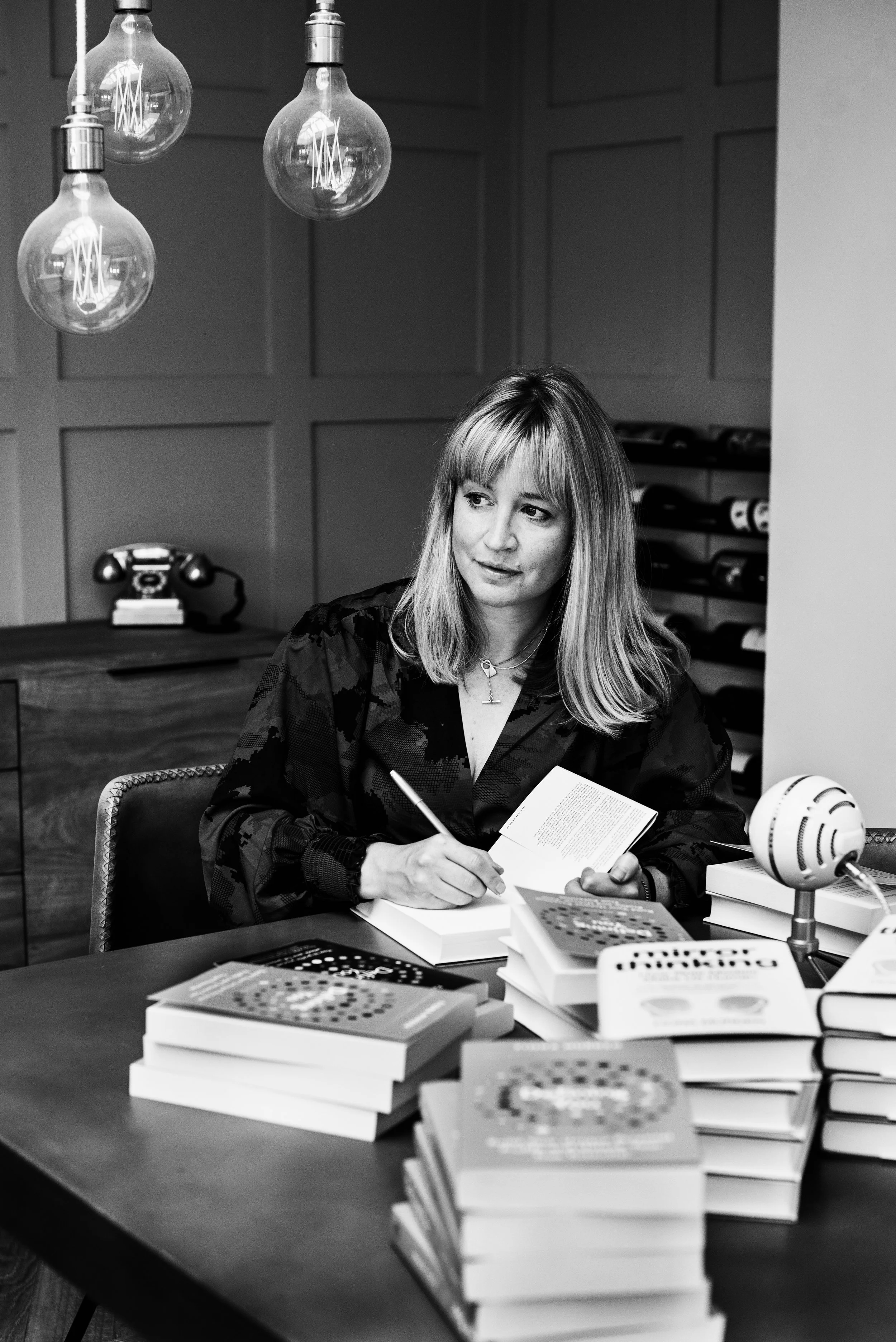
Oka was founded by Fiona Murden, an organisational psychologist, author, educator and researcher.
For over two decades, Fiona has worked across leadership, healthcare, education, sport, and creative industries observing and applying what enables people to function well under pressure, and what leads capable people to struggle, withdraw, or unravel.
Oka is the organisational expression of that work.
It exists to ensure that the human skills most closely linked to life outcomes, wellbeing, resilience, and performance are not treated as abstract ideas or personal advantages, but as learnable capabilities, grounded in evidence and taught deliberately.
The work Oka develops is informed by psychology and neuroscience, and shaped in dialogue with expertise from education, data and analytics, workforce development, sport, technology, and lived experience. It is applied in real settings with individuals, students, teams, and institutions, where it can be observed, tested, adjusted, and stress-tested under real conditions.
Learning designs are refined through delivery, feedback, and reflection, and challenged through interdisciplinary input rather than protected by a single theoretical lens. What proves useful is kept. What doesn’t transfer is revised or discarded.
Oka’s role is not to invent new human skills, but to integrate what is already known, across disciplines and contexts, and translate it into practical approaches that people can use, remember, and carry forward over time.
This is how Oka ensures the work remains psychologically grounded, ethically held, and responsive to a changing world.